Engaging in consistent glutes exercise is far more than just chasing aesthetic goals. Strong glutes are foundational for overall strength and well-being. They play a critical role in daily movements and athletic performance. This comprehensive guide will show you how to effectively train your glutes. You will learn the best exercises and how to integrate them into your routine. Start building powerful, functional glutes today!
Glutes Exercise: Why It Matters So Much
Training your glutes effectively impacts more than just how your clothes fit. A well-developed posterior chain supports your entire body. It prevents injury and enhances your physical capabilities. Understanding these benefits motivates consistent effort.
Beyond Aesthetics: The Functional Power of Your Glutes
Your gluteal muscles are the largest and most powerful muscles in your body. They drive movement in your hips and thighs. Strong glutes improve posture and alleviate lower back pain. They also boost power for running, jumping, and lifting. Injury prevention is a major benefit. Weak glutes can lead to knee issues and ankle instability. A targeted glutes exercise program is essential for a healthy body.
Anatomy of the Glutes: Understanding the Muscle Group
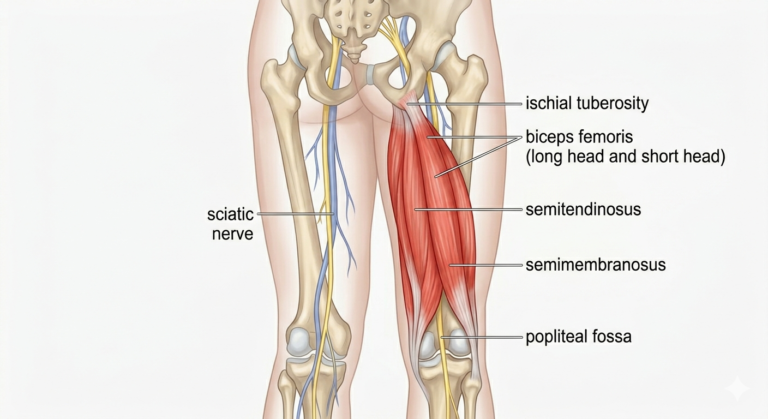
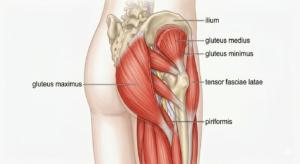
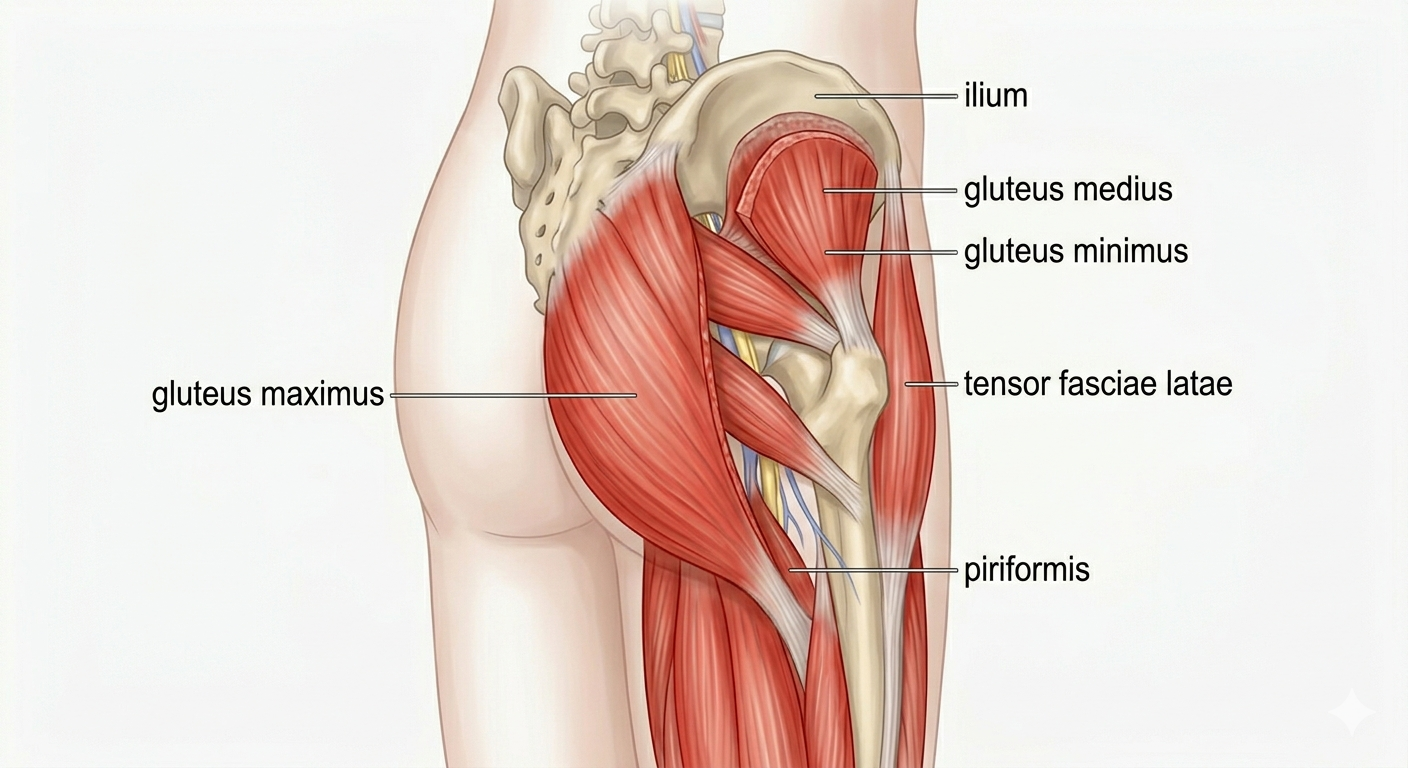
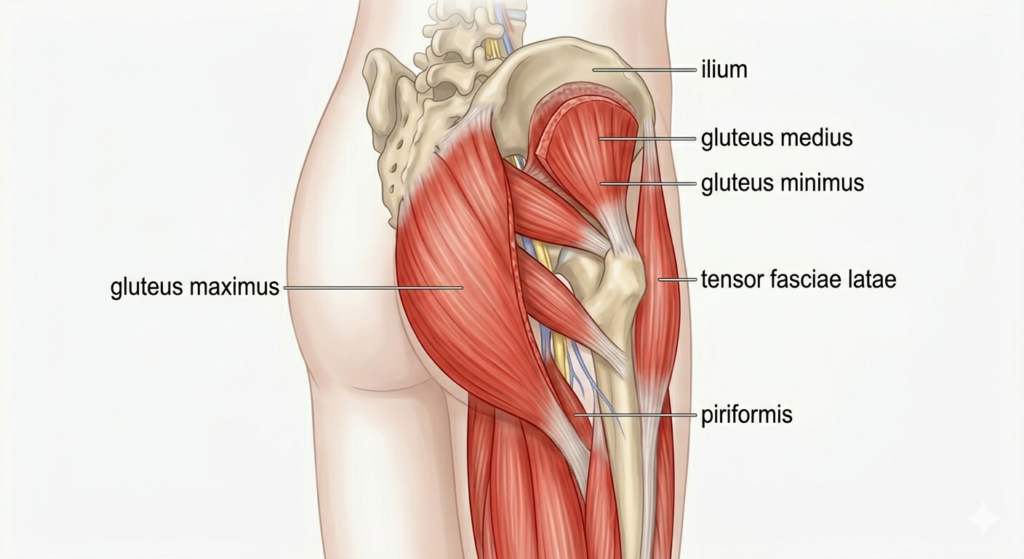
The gluteal muscles, collectively known as the “glutes,” form the buttocks and are the powerhouse of the human body. This group consists of three main muscles that are vital for maintaining an upright posture and generating power for lower-body movement.
The glutes comprise three distinct muscles. The gluteus maximus is the largest. It provides most of the power for hip extension. The gluteus medius and minimus are smaller. They are crucial for hip abduction and stabilization. All three muscles work together. They create powerful, stable movements. Understanding their roles helps you choose the right glutes exercise for balanced development.
The glutes are layered from largest and most superficial to smallest and deepest:
- Gluteus Maximus: The largest and most powerful muscle in the human body; it creates the bulk of the buttock shape and is responsible for hip extension (moving the thigh backward).
- Gluteus Medius: A fan-shaped muscle located on the outer hip; its primary job is hip abduction (moving the leg away from the midline) and stabilizing the pelvis when you walk or stand on one leg.
- Gluteus Minimus: The smallest and deepest of the three; it sits directly under the medius and works alongside it to stabilize the hip joint and rotate the thigh.
Top 7 Glutes Exercise Moves You Must Do
These seven exercises are cornerstones of any effective glute training program. They target the glutes from various angles. Incorporate them for comprehensive strength and development. Proper form is key for maximum benefit and safety during any glutes exercise.
Barbell Back Squats: The Foundation Glutes Exercise
The barbell back squat is a king among lower body exercises. It powerfully engages the glutes, quads, and hamstrings. This compound movement builds significant overall strength. It also promotes excellent glute activation when performed correctly.
- Place a barbell across your upper back.
- Stand with feet shoulder-width apart, toes slightly out.
- Descend by pushing your hips back and bending your knees.
- Keep your chest up and back straight throughout the movement.
- Descend until your thighs are parallel to the floor or deeper.
- Drive through your heels to return to the starting position.
- Squeeze your glutes at the top of the movement.
Romanian Deadlifts (RDLs)
RDLs are phenomenal for targeting the hamstrings and glutes. They emphasize the eccentric phase of the lift. This promotes muscle growth and improves hip hinge mechanics. RDLs are a critical glutes exercise for posterior chain development.
- Hold a barbell or dumbbells in front of your thighs.
- Keep a slight bend in your knees.
- Hinge at your hips, pushing your glutes back.
- Lower the weight while keeping your back straight.
- Feel a stretch in your hamstrings.
- Return to the starting position by squeezing your glutes.
Barbell Hip Thrusts
Hip thrusts are arguably the most effective glutes exercise for direct glute activation. They allow for heavy loads and minimal spinal compression. This makes them excellent for building peak glute strength and size. Focus on a strong glute squeeze at the top.
- Sit on the floor with your upper back against a bench.
- Roll a barbell over your hips.
- Bend your knees, placing feet flat on the floor.
- Drive through your heels, lifting your hips towards the ceiling.
- Squeeze your glutes powerfully at the top.
- Slowly lower your hips back down.
Lunges (Walking or Stationary)
Lunges are a unilateral (single-leg) glutes exercise. They help correct muscle imbalances and improve stability. Both walking and stationary lunges effectively target the gluteus maximus and medius. They also improve balance significantly.
- Stand tall with your feet hip-width apart.
- Step forward with one leg, lowering your hips.
- Bend both knees to 90 degrees.
- Ensure your front knee is over your ankle.
- Push off your front foot to return to the start.
- Alternate legs if walking, or repeat on one side for stationary.
Glute Bridges
The glute bridge is a fantastic bodyweight glutes exercise. It’s perfect for beginners or as a warm-up. It effectively activates the gluteus maximus. This exercise is also a great way to prime your glutes before heavier lifts. Focus on mind-muscle connection.
- Lie on your back with knees bent, feet flat on the floor.
- Place your arms at your sides, palms down.
- Lift your hips off the floor, squeezing your glutes.
- Form a straight line from your shoulders to your knees.
- Hold briefly at the top, then slowly lower your hips.
Step-Ups
Step-ups are another excellent unilateral glutes exercise. They build strength and power in each leg individually. This exercise also improves balance and coordination. Use a sturdy box or bench for safety. Adjust the box height for varying intensity. Higher boxes increase glute activation.
- Stand facing a sturdy box or bench.
- Step onto the box with one foot.
- Drive through your heel to stand up on the box.
- Bring your trailing leg up to meet the first.
- Step down with the leading leg, then the other.
- Alternate leading legs or complete reps on one side.
Cable Kickbacks / Banded Abductions
These exercises specifically target the gluteus medius and minimus. These smaller muscles are crucial for hip stability and shape. They can be performed with a cable machine or resistance bands. They are fantastic for finishing off your glute workout. They improve hip external rotation strength.
- Attach an ankle strap to a cable machine or use a resistance band.
- Stand facing the machine or anchor the band.
- Kick your leg straight back, squeezing your glute.
- Control the movement as you return your leg to the start.
- For abductions, push your leg out to the side against resistance.
- Focus on slow, controlled movements and glute contraction.
Optimizing Your Glutes Exercise Routine
Beyond simply doing exercises, optimizing your routine ensures consistent progress. Strategic planning enhances muscle growth and prevents plateaus. Consider frequency, load, and recovery to maximize results.
Crafting a Balanced Glutes Exercise Program
A balanced program includes varied exercises that hit all parts of the glutes. Aim for 2-3 glute-focused workouts per week. Allow for adequate rest between sessions. Progressive overload is vital for continuous growth. Gradually increase weight, reps, or sets over time. Incorporate a proper warm-up before your glutes exercise. Always cool down with stretching afterwards. For more details on warming up, see Benefits of Warming Up. This crucial step prepares your muscles for work. It also prevents potential injuries.
Equipment for Your Glutes Exercise Journey
You don’t need a fully equipped gym to build strong glutes. Many effective exercises use only body weight. Resistance bands add excellent tension and portability. Dumbbells and barbells allow for progressive overload. Cable machines provide unique angles of resistance. Choose equipment that fits your access and comfort level. All can lead to a great glutes exercise workout.
Common Mistakes to Avoid in Glutes Exercise
Poor form is the most common mistake. It reduces effectiveness and increases injury risk. Ensure you actively engage your glutes throughout each movement. Avoid letting other muscles, like your lower back, take over. Starting with too much weight too soon can also lead to injury. Prioritize form over load. Listen to your body and adjust as needed. Always focus on mind-muscle connection. This ensures your glutes are doing the work.
Fueling Your Glutes: Nutrition and Recovery
Proper nutrition is as important as the workout itself. Consume adequate protein for muscle repair and growth. Include healthy fats and complex carbohydrates for energy. Hydration is also crucial for performance. Don’t forget the power of rest. Quality sleep allows your muscles to recover and rebuild. For more recovery tips, explore Post-Workout Recovery Tips. This holistic approach supports your glutes exercise goals fully.
Conclusion
Consistent glutes exercise is a powerful investment in your health and fitness. By incorporating these essential moves and optimizing your routine, you can build a stronger, more functional posterior chain. Remember, progress takes time and dedication. Stay consistent with your workouts and prioritize proper form. Fuel your body with good nutrition and adequate rest. Start today to unlock the full potential of your glutes! Begin your journey to a stronger, healthier you. More about Glutes