Neglecting your lower legs can hinder both aesthetics and athletic performance. Effective calves exercise is crucial for developing powerful, well-rounded musculature. Strong calves support stability, enhance explosive movements, and contribute significantly to overall leg strength. This comprehensive guide reveals 7 proven strategies to help you build resilient and visually impressive calves. You will discover targeted calf movements, optimal training methods, and common pitfalls to avoid for maximum growth.
Calves Exercise: Why They Matter More Than You Think
Many gym-goers overlook their calves, focusing instead on larger muscle groups. However, strong calves offer substantial benefits beyond just aesthetics. They play a vital role in everyday mobility, athletic performance, and injury prevention. Understanding their function is key to effective calf development.
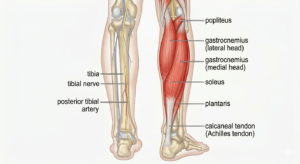
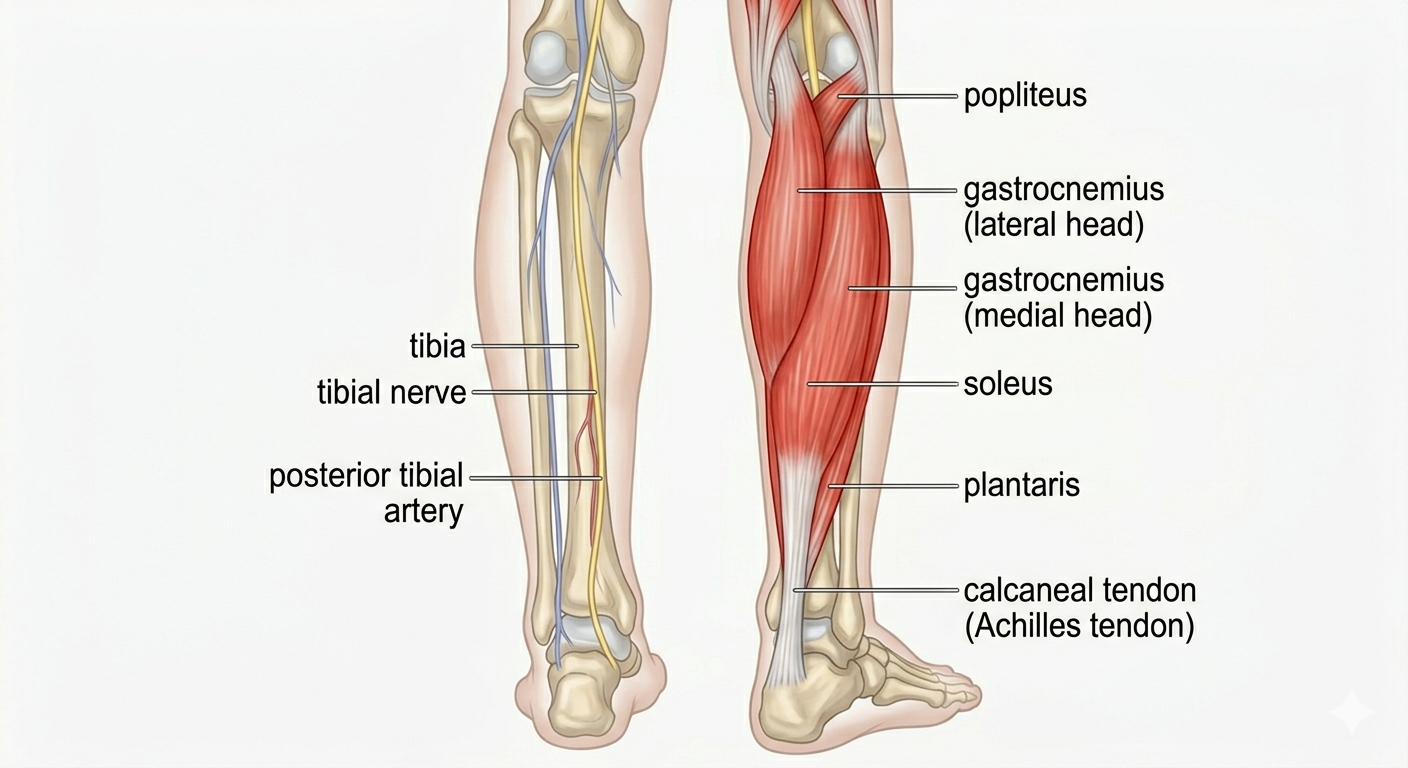
Your calves consist primarily of two muscles: the gastrocnemius and the soleus. The gastrocnemius is the larger, more visible muscle, responsible for powerful, explosive movements. It crosses both the knee and ankle joints. The soleus sits beneath the gastrocnemius, crucial for endurance activities and posture. It only crosses the ankle joint. Both require specific calf muscle exercises for complete development. More about calves
Anatomy of Calves Muscles
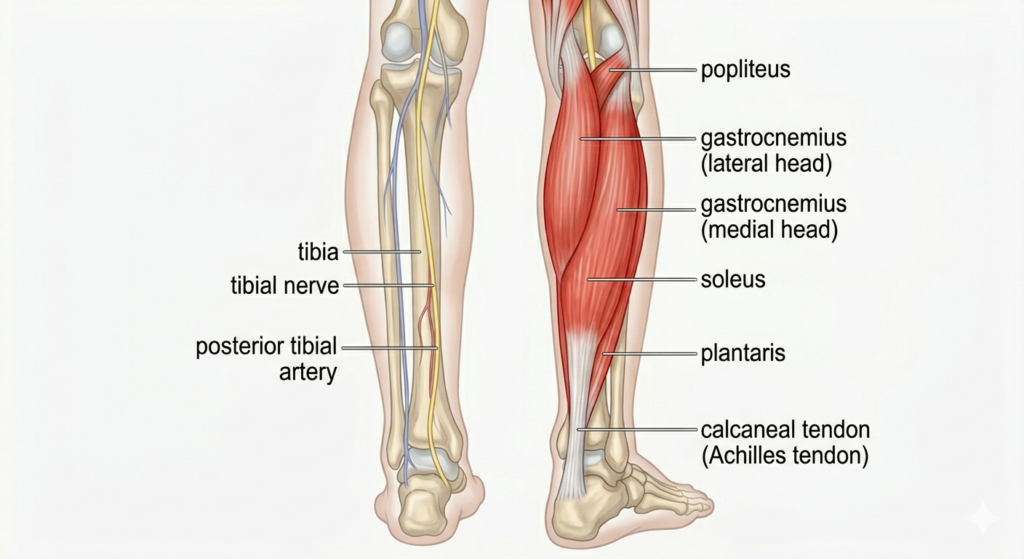
The calf muscle, known anatomically as the triceps surae, is located on the back of the lower leg. It is a powerful muscle group designed to support the entire weight of the body and provide the “spring” in your step. The calf is primarily composed of two major muscles that work together to pull the heel upward:
- Gastrocnemius: This is the large, visible muscle that creates the “diamond” shape on the back of the leg. It has two heads (medial and lateral) and crosses both the knee and the ankle joints. Because it crosses the knee, it also helps slightly with knee flexion.
- Soleus: A broad, flat muscle located directly underneath the gastrocnemius. Unlike the gastrocnemius, it only crosses the ankle joint. It is a vital postural muscle that helps you maintain balance while standing for long periods.
- Plantaris: A very thin, small muscle that is absent in about $10\%$ of the population. It has a long, slender tendon that is sometimes mistaken for a nerve.
Key Functions of Calves Muscle
The calf muscles are the primary drivers of plantar flexion, which is the action of pointing your toes downward or pushing off the ground.
Power: Essential for explosive movements like jumping, sprinting, and climbing stairs.
Endurance: The soleus is highly resistant to fatigue, allowing us to walk and stand for hours.
Venous Return: Often called the “second heart,” the calf muscles help pump blood from the lower extremities back up toward the heart through contraction.
Top 7 Calves Exercises for Maximum Growth & Strength
To effectively target both heads of the gastrocnemius and the soleus, incorporate a variety of movements. These 7 proven calves exercise provide comprehensive stimulation. Focus on controlled movements and a full range of motion for best results. Consistency is truly essential for progress.
Standing Calf Raises
Standing calf raises primarily target the gastrocnemius muscle. This movement can be performed using a dedicated machine or with dumbbells while standing on a step. Ensure your heels drop below the step for a deep stretch. Push high onto the balls of your feet for peak contraction. Control both the eccentric and concentric phases.
Seated Calf Raises
Seated calf raises are excellent for isolating the soleus muscle. The bent-knee position effectively minimizes gastrocnemius involvement. Use a seated calf raise machine or a barbell across your thighs with padding. Focus on a deep stretch at the bottom and a powerful squeeze at the top. This calves exercise is vital for soleus development.
Single-Leg Calf Raises
Single-leg calf raises enhance unilateral strength and address muscle imbalances. This variation helps improve balance and coordination. Hold a dumbbell in one hand for added resistance. Perform on a step or flat ground, focusing on controlled movement. This challenging calf movement builds significant power. Ensure proper balance before adding weight.
Calf Press on Leg Press Machine
The calf press on a leg press machine allows for heavy loading, stimulating significant growth. Position your feet at the bottom edge of the platform. Keep your knees slightly bent but fixed throughout the movement. Drive through the balls of your feet, extending fully. Slowly return to the starting position for a deep stretch. This lower leg calves exercise is highly effective.
Donkey Calf Raises
Donkey calf raises are a unique and effective way to target the gastrocnemius. The bent-over position creates a different angle of resistance. Historically, people would sit on the lifter’s back for resistance. Now, machines replicate this movement. Focus on a full range of motion and a strong contraction. This calves exercise offers a great stretch at the bottom.
Jump Rope (Plyometric Calves Exercise)
Jump rope is a dynamic, plyometric exercise that builds explosive calf power. It improves cardiovascular health and coordination simultaneously. Focus on light, quick bounces primarily from your ankles and calves. Maintain a steady rhythm and land softly on the balls of your feet. This plyometric exercise boosts athleticism.
Stair Calf Raises
Stair calf raises are a versatile bodyweight calves exercise. They can be performed almost anywhere with a sturdy step or stair. Stand on the edge of a step with your heels hanging off. Lower your heels slowly for a deep stretch, then push up powerfully. This bodyweight exercise is perfect for home workouts or as a warm-up. Control the entire movement.
Optimizing Your Calves Exercise Routine for Best Results
Beyond simply performing exercises, smart programming maximizes your calf development. Consider rep ranges, progressive overload, and essential recovery strategies. These elements collectively contribute to superior growth. Implement these principles into your calf workout plan for optimal outcomes.
Rep Ranges & Volume
The gastrocnemius generally responds well to a variety of rep ranges, from moderate to high. For strength, 6-10 reps can be effective. For hypertrophy, 10-15 reps often work best. The soleus, being a slower-twitch dominant muscle, often benefits from higher rep ranges (15-25+). Experiment to find what stimulates growth for you. Aim for 2-3 sessions per week, allowing for recovery.
| Calves Exercise Type | Primary Muscle Target | Recommended Rep Range | Pros |
| Standing Calf Raises | Gastrocnemius | 8-15 | High load potential, good stretch |
| Seated Calf Raises | Soleus | 15-25+ | Isolates soleus, endurance focus |
| Single-Leg Calf Raises | Gastrocnemius & Soleus | 10-20 | Corrects imbalances, enhances stability |
Incorporating Progressive Overload
Muscles adapt over time, requiring increasing challenge to grow. Progressive overload is fundamental for calf development. Gradually increase the weight you lift, the number of repetitions, or the sets. You can also increase time under tension or reduce rest periods. Always prioritize form over simply lifting heavier weight. Consistent challenge from your calf movements is vital.
Stretching & Recovery
Flexibility and recovery are critical for calf health and growth. Incorporate regular calf stretches into your routine, especially after workouts. Foam rolling can also help release muscle tension and improve blood flow. Adequate sleep and proper nutrition support muscle repair. Prioritize rest days to allow your calves to recover and rebuild. This reduces injury risk significantly. Explore our guide to Full Leg Workout Routines for comprehensive lower body training.
Nutrition & Hydration
Muscle growth requires proper fuel. Ensure you consume enough protein to support muscle repair and synthesis. Carbohydrates provide energy for your workouts. Stay well-hydrated throughout the day, as water is essential for all bodily functions, including muscle performance. A balanced diet complements your calf building efforts perfectly. Enhance your muscle growth with tips from our Muscle Nutrition Guide.
Common Calf Training Mistakes to Avoid
Even with the right exercises, poor execution can limit your progress. Be aware of these common errors to ensure your calves exercise routine is effective. Avoiding these pitfalls will lead to better results. Focus on quality over quantity in your training efforts. Correcting form ensures safety and efficacy.
- Not Using a Full Range of Motion: Half reps leave potential gains on the table. Always go for a deep stretch at the bottom and a full contraction at the top.
- Ignoring the Soleus: Neglecting seated calf raises means incomplete calf development. Both gastrocnemius and soleus need attention.
- Lack of Variety: Sticking to only one or two exercises can lead to plateaus. Mix up your routine to keep stimulating growth.
- Overtraining: While calves are resilient, they still need recovery. Listen to your body and don’t train them every day.
- Using Momentum: Bouncing at the bottom or top of the movement reduces muscle engagement. Control the weight throughout.
Conclusion: Build Your Best Calves
Building strong, well-developed calves requires dedication, knowledge, and consistent effort. By incorporating the diverse calf strengthening techniques and optimization strategies outlined here, you are well-equipped. Remember to prioritize proper form, progressive overload, and adequate recovery. Don’t let your calves be an afterthought in your fitness journey. Start applying these proven methods today and witness remarkable improvements in your lower body strength and aesthetics. Transform your calves and elevate your entire physique!